es auf etwas ankommen lassen

Based on: ankommen, lassen
Phrase
1.

to risk something, to take the risk

(or "es drauf / darauf ankommen lassen")
Examples
  • Ich lasse es drauf ankommen.
  • I'll take my chance./I'll risk it.
  • Practice pronunciation - click once to start recording and again to stop

Word Family

Knowing relations between words can help understand their meanings and build a more connected vocabulary network. Here, you can explore parents and offspring and discover the whole family.

  • shows how many children or parents the word has
  • get the translations and a link
Loading word family…
Sources for Etymology:

My Articles

Prefix Verbs Explained – “ankommen”

A fun, detailed look at the super useful meanings of "ankommen" and what arriving has to do with depending and how Germans say "It depends".

Vocab: ankommen, ankommen auf, die Ankunft

Read article →

The meaning (and use) of “lassen”

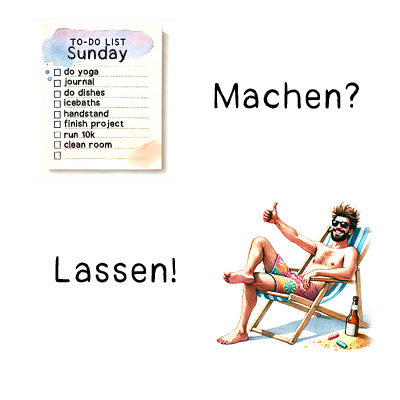
The German 'lassen' translates to 'to let' and 'to leave'. But the uniting theme is 'not doing'. And that can actually explain all the various uses of 'lassen'.

Read article →

Questions and Comments

Do you have questions about the usage or meaning of “es auf etwas ankommen lassen”? Just ask here and I’ll try to clear it up.

guest

0 Comments
Newest
Oldest

How many meanings does the German word 'es auf etwas ankommen lassen' have?

es auf etwas ankommen lassen has 1 distinct meaning: 1. to risk something, to take the risk.

What is 'es auf etwas ankommen lassen' related to?

The word 'es auf etwas ankommen lassen' is related to ankommen and lassen.

Where can I learn more about 'es auf etwas ankommen lassen'?

Here are some articles where you can learn more about 'es auf etwas ankommen lassen':

Prefix Verbs Explained – “ankommen”
A fun, detailed look at the super useful meanings of "ankommen" and what arriving has to do with depending and how Germans say "It depends".
Vocab: ankommen, ankommen auf, die Ankunft
Read article

The meaning (and use) of “lassen”
The German 'lassen' translates to 'to let' and 'to leave'. But the uniting theme is 'not doing'. And that can actually explain all the various uses of 'lassen'.
Read article