**LEO Dictionary is currently down, so it's not just you. They're also insolvent, so .. uh... try my dictionary, I guess. **
← Vocabulary

Must have words

This category compiles all the words that you absolutely, totally, undeniably, 100%edly haaaaave to know because they’re so useful and important.

Your progress in this section:

Join to start tracking.

Login Sign Up
The Meaning of "vorher" (and "davor")

"vorher" looks like the counterpart of "vorhin", but that's misleading. "vorher" actually is a synonym for "davor" and it's really really common in daily life.

vorher, vorhin, davor

Read article →
The Meaning of "vorhin"

"vorhin" is a really common and useful time adverb that you can use to talk about your day. Today, we'll learn all about it.

vorhin

Read article →
The True Meaning of "sollen" - German Modal Verbs

"sollen" is one of the German modal verbs and most learners have a diffuse idea of the meaning, but can't really pinpoint it. Today, we'll explore the core.

sollen, sollen vs müssen

Read article →
Trying in German

"to try" has several translations in German - versuchen, probieren, ausprobieren and kosten. Today, we'll look at the differences and learn when to use which.

versuchen, probieren, ausprobieren, anprobieren, kosten

Read article →
"remember" and "remind" in German

"remember" and "remind" both translate with "erinnern", but the structure is a bot different. And there are some other options in spoken German.

erinnern, sich erinnern, sich merken, Gedächtnis, Erinnerung

Read article →
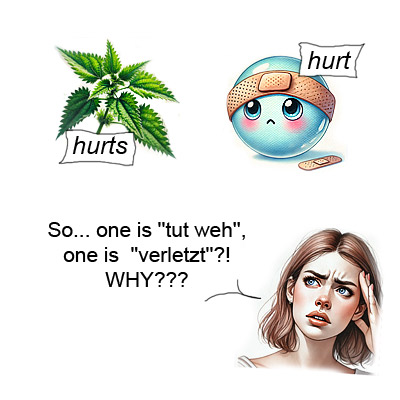
Hurting in German - Basic Vocabulary

verletzen, Verletzung, verletzend, wehtun, der Schmerz, die Kopfschmerztablette

Read article →
Word of the Day - "sammeln"

A fun look at the family "sammeln" and its related words and the surprisingly obvious connection between "gather" and "together".

sammeln, die Sammlung, aufsammeln, einsammeln, ansammeln, versammeln, die Versammling, samt, mitsamt, gesamt, Pony

Read article →
Word of the Day - "heißen"

"heißen" is the German word of choice when you want to introduce yourself and ask others their name. But it also means "to mean". Today, we'll learn how to use it.

heißen, bedeuten, verheißen, das Geheiß

Read article →
Word of the Day - "üben"

A quick look at the meaning of "üben", the difference to "trainieren" and a few of the surprising related words that don't seem related at all.

üben, die Übung, einüben, ausüben, verüben, üblich, trainieren

Read article →
Word of the Day - "wahr"

"Wahr" is the German word for "true" and there are plenty of useful words based on it. Today, we'll take a look at this awesome family. Fact!!

wahr, die Wahrheit, wahrscheinlich, unwahrscheinlich

Read article →
Using The Verb "sein" - Interactive Speaking Guide

Practice the German verb "sein" (to be) - by speaking. All important forms and phrases in one exercise, perfect for beginners as well as advanced learners.

Read article →
The meaning of "bereit"

Today, we'll learn how to say "ready" in German and see the difference between "bereit" and "fertig". And we'll explore the other words in the family.

bereit, bereits, die Bereitschaft, vorbereiten, die Vorbereitung, nachbereiten, zubereiten, aufbereiten

Read article →
Bekommen vs Become - False Friends Explained

German bekommen and English to become look the samee but they don't mean the same at all. Today, we'll find out why and how surprisingly close they actually are.

bekommen

Read article →
Using "aufhören" - Interactive Speaking Guide

Learn and practice all important phrasings and structures with "aufhören" (present, past, questions, ...) - by actually speaking :).

Read article →
"nutzen" and "benutzen" - The Difference Explained

"nutzen", "benutzen" and "verwenden" all mean "to use", but there are differences when to use which. Today, we'll learn all about that with lots of examples.

nutzen, benutzen, verwenden, der Gebrauch, nützlich, hilfreich, nützen, abnutzen, ausnutzen

Read article →
Word of the Day - "die Arbeit"

"Arbeit" means "work" and "arbeiten" means "to work". But there are a few traps. We'll explore those and also the surprising connections to robots and orphans

die Arbeit, arbeiten, erben, das Erbe, Roboter

Read article →
Word of the Day - "gemein"

"gemein" means "mean" in the sense of "bad". But lots of words with "gemein" in them are about community. Today, we'll find out why.

gemein, die Gemeinheit, gemeinsam, die Gemeinde, die Gemeinschaft, allgemein, im Allgemeinen

Read article →
The meaning of "die Eile"

"die Eile" is the word for "the hurry". And the verb is "sich beeilen", with a reflexive. Today, we'll learn about the use them and their crazy origin story.

die Eile, eilen, sich beeilen, eilig, voreilig

Read article →
The Meaning of "unbedingt"

"unbedingt" can be translated as "definitely", but to really understand it, you need to check "the vibe". Today, we'll learn when to use it and much more.

unbedingt, die Bedingung, bedingen,

Read article →
Word of the Day - "ungefähr"

A quick look at the meaning of "ungefähr" and what estimates have to do with danger and driving.

ungefähr, die Gefahr, gefährlich, circa

Read article →
Word of the Day - "drücken"

Discovering the Meaning of "Der Druck" in German: Exploring the nuances of expressions like "ausdrücken" and "unterdrücken" and their Latin origins.

drücken, ausdrücken, unterdrücken, beeindrucken, der Eindruck, der Ausdruck, bedrücken

Read article →
Word of the Day - "der Druck"

A fun look at the word der Druck and the difference between the verbs drucken and drücken. Featuring also: a big let down.

der Druck, der Händedruck, der Luftdruck, der Blutdruck, drucken, der Drucker, die Druckerei, ausdrucken, bedrucken, der Abdruck

Read article →
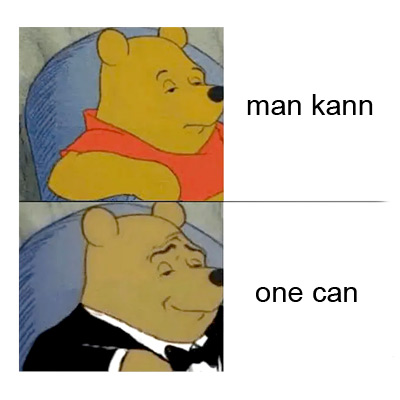
"man" - How Germans really use it

Technically, "man" means "one". But in practice, Germans use "man" where English uses a general "you". "Man kann" is "you can. And that's not all there is.

man, einer, einem, einen

Read article →
How to say "anyway" in German

In this post, we'll learn how to say "anyway" in German. There are three ways and they each express a very distinct meaning. Mixing them up is very confusing.

trotzdem, jedenfalls, wie dem auch sei, wie auch immer, naja, sowieso, eh

Read article →
The Meaning of "von ... aus"

'von... aus' is a very useful phrase in daily life and it can be used for location, express volition and it's a really common way to say "Fine with me."

von mir aus, von da aus, von sich aus

Read article →
The meaning of "holen"

A fun look at the meaning "holen" and its many useful prefix versions and the secret connection between fetching, racing and shouting.

holen, rausholen, ausholen, abholen, aufholen, überholen, sich erholen, runterholen

Read article →
The Meaning of "erledigen"

A fun look at the meaning of "erledigen", how to say "Never mind!" and what all that has to do with body parts, memberships and a certain Goethe.

erledigen, das Glied, das Mitglied, gliedern, die Gliederung, ledig, lediglich

Read article →
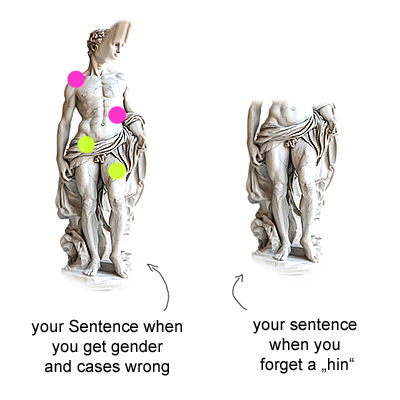
The meaning of "hin"

The German word "hin" means "there", but it's better to think of it as a generic marker - like #destination. And it sounds really wrong if you forget it.

Read article →
"verschwinden" and "verschwenden" - Meanings Explained

"verschwinden" is to disappear, verschwenden is to waste. Today, we'll find out how they connect, and what vertigo has to do with it.

verschwinden, Schwund, Geschwindigkeit, verschwenden

Read article →
The meaning of "stecken" - And its Prefix Versions

"stecken" is a relative of "to stick". But why are the words for wall plug, silverware and hiding all with "stecken" in them? Today, we'll find out.

stecken, verstecken, anstecken, das Besteck, der Stecker, die Steckdose

Read article →
The meaning of "gehören"

'gehören' means 'to belong'. But why? What does 'hören' have to do with it? That's what we'll find out today.

gehören, das Gehör, gehorchen, sich gehören

Read article →
German 'bald' vs English 'bald' - False Friends Explained

English "bald" is about no hair, German "bald" means "soon". What could possibly be the connection there? Or is there one at all? Today, we'll find out.

bald, kahl, glatt, die Glatze

Read article →
German Prepositions Explained - "gegen"

A fun look at the meaning of "gegen" and why its many useful related words sometimes seem to have contradictory meanings.

gegen, entgegen, dagegen, gegenseitig, der Gegner, begegnen, der Gegenstand, gegenüber, die Gegend, entgegnen

Read article →
The meaning of "Bescheid"

A quick look at the meaning of "Bescheid", how to use "Bescheid sagen" in daily life and what it has to do with being humble.

der Bescheid, Bescheid sagen, bescheiden, die Bescheidenheit

Read article →
Word of the Day - "peinlich"

A fun look at the meaning of "peinlich", how to say that you're embarrassed in German and some more words like shame or disgrace :).

peinlich, die Pein, der Schmerz, das Schmerzmittel, die Schande, bloßstellen, sich blamieren

Read article →
leid tun, leider and Leidenschaft - The Family of "leiden"

A fun look at the meaning of "leiden" and the related words "leider" and "die Leidenschaft" and what passion has to do with suffering.

leiden, leid tun, leider, die Leidenschaft, die Beleidigung, das Mitleid

Read article →
Word of the Day - "trauen"

A fun look at the meaning of "trauen", "sich trauen" and most importantly "vertrauen" and what they all have to do with "truth".

trauen, sich trauen, vertrauen, treu, heiraten,

Read article →
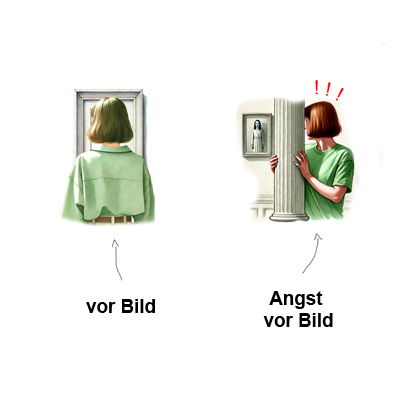
Exploring the Family of "das Bild"

A fun look at the meaning and use "das Bild" and how its core idea formed all the cool, useful related words like "bilden" (to form) or "Bildung" (education)

das Bild, bilden, sich bilden, ausbilden, die Bildung, die Ausbildung, sich einbilden

Read article →
Word of the Day - "schade"

"schade" is a super common way to express that something is a pity. Today, we'll learn how to use it and explore other cool words like Schaden or Schadenfreude.

schade, schaden, schädlich, Schadenfreude, beschädigen

Read article →
Word of the Day - "rufen"

"rufen" means "to call". "anrufen" also means "to call". And so does "aufrufen". Today, we'll learn all about the family of "rufen" and when to use which word.

rufen, der Ruf, anrufen, ausrufen, aufrufen, der Ruhm, berühmt, der Beruf, die Berufung

Read article →
The Preposition "auf" - All Meanings and Uses

The German preposition "auf" can mean "on" and "for", but also "open". And in combinations like "warten auf", it has a sense of targeting. Let's explore that.

auf, aufgehen, aufmachen, aufgehen, warten auf, stehen auf, aufhaben

Read article →
"to feel" in German - fühlen, sich fühlen, anfühlen

"fühlen" means "to feel". But there's also "sich fühlen" and "sich anfühlen" and all three have distinct meanings. Today, we'll learn how to use them properly.

fühlen, sich fühlen, das Gefühl, spüren, sich anfühlen

Read article →
The Modal Verb "dürfen" - All You Need to Know

"dürfen" is one of the German modal verbs and its core idea is "having permission". But many of the related words are about a different idea and seem unrelated.

duerfen, der Bedarf, bedürftig, das Bedürfnis

Read article →
The Meaning of - "der Ärger"

A fun look at how to talk about anger in German with lots of useful phrasings like Ärger machen or Ärger kriegen. And we'll find the neat little particle arg.

der Ärger, (sich) ärgern (über), die Wut, wütend, ärgerlich, verärgern, arg

Read article →
The Meanings of "etwa"

Most of you know that 'etwas' means 'something'. But German also has 'etwa' ohne 's' and it's actually kind of common. Today, we'll learn what it means.

etwa, in etwa, etwaig

Read article →
German Prepositions Explained - "vor"

The core idea of "vor" is "in front" but it's used in various abstract ways as a prefix and combined with verbs. Today, we'll find out all about it.

vorgehen, vorhaben, vormachen, Angst haben vor, warnen vor, vor Lachen

Read article →
"dabei" - Meaning and Use Explained

Dabei is not only a common da-word, it's part of some really cool and useful phrasings like "dabei haben" or "dabei sein". Today, we'll find out all about it.

dabei, dabei haben, dabei sein, wobei

Read article →
English 'art' vs German 'Art' - False Friends Explained

A fun look at the meaning of the German words "die Art" and "die Kunst" and why only the second one actually means art.

die Art, die Tonart, die Tierart, artgerecht, artig, eigenartig, die Kunst, künstlich, der Künstler

Read article →
The Meaning of "die Laune" (Mood in German)

A quick, fun look at the meaning of "die Laune" and how to say you're in a good mood in German. Also: the difference to "die Stimmung" and a surprise connection

die Laune, gute Laune, die Partylaune, launisch, gelaunt, die Stimmung, die Stimmungsschwankung

Read article →
The Meanings of "die Schuld" and "schulden"

A fun look at the meaning of "die Schuld" and its family, a nice theory why Germans don’t like having debt and a super surprising connection to English. #OMG

die Schuld, schuldig, die Entschuldigung, (sich) entschuldigen, Schulden

Read article →
Prefix Verbs Explained - "die Ausnahme"

We all know, German is full of exceptions. Today, we'll look the German word for it and learn about the prefix verb it comes from.

die Ausnahme, ausnehmen, rausnehmen, ausnahmsweise, ausgenommen

Read article →
Prefix Verb Explained - "aufmachen"

A quick look at "aufmachen" and why it doesn't only mean "to open". Also: a look at the secret behind the r-verion and the super useful "raufmachen".

Read article →
Word of the Day - "Teil"

The German word "Teil" has two genders. Today, we'll find out why and what they mean and we'll go over the most useful compound nouns with Teil.

das Teil, der Teil, der Großteil, das Gegenteil, der Vorteil, vorteilhaft, der Nachteil

Read article →
Word of the Day - "passen"

We'll take a thorough look at the meaning of "passen", how to use it and its various cool prefix versions and pass by "passieren". A vocabulary turbo boost :)

passen, reinpassen, raufpassen, anpassen, die Anpassung, aufpassen, passieren

Read article →
Word of the Day - " die Mühe"

"sich Mühe geben" is the main German translation for "making an effort". But what is Mühe? And why is the verb reflexive. Today, we'll learn all about this.

die Mühe, mühelos, sich Mühe geben, sich bemühen

Read article →
The meaning of "nämlich"

"nämlich" looks like namely, but that's not really a fit. "nämlich" is actually hard to translate but easy to understand. And today, we'll do just that.

nämlich, namely

Read article →
Fun in German - "der Spaß"

A fun look at the meaning of “der Spaß”, the various idiomatic phrasings like “Spaß machen” or “viel Spaß” and we’ll learn how to say “It was fun.” in German (#notLikeEnglish)

der Spaß, Spaß machen, Spaß haben, aus Spaß, Spaß verstehen, bespaßen

Read article →
The Different Meanings of "es"

"es" means "it" - that's the short story. But there's more to 'es' than that. Today, we'll take a thorough look at all its uses and functions. #grammarnerd

es

Read article →
Word of the Day - "brauchen"

A fun look at "brauchen" (to need), its prefix versions and how to use "brauchen" with verbs. Also: some really cool relations to English and other languages.

brauchen, verbrauchen, der Brauch, der Bedarf, Gebrauchsanweisung

Read article →
To Know in German - "wissen" vs "kennen"

English "to know" has two translations - "wissen" and "kennen". And there are 2 ways to tell them apart. One is about meaning, the other about grammar.

Read article →
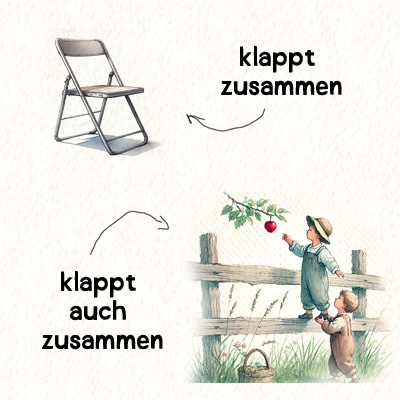
The meanings of "klappen"

"klappen" is a really, really common word in colloquial German. And so is the noun "die Klappe". Today, we'll learn what they mean and how to use them.

klappen, die Klappe, zuklappen, aufklappen, Klappstuhl, klatschen

Read article →
The meaning of "der Zweifel"

A fun look at "Zweifel" and what the number two has to do with "doubt". Also, we'll learn about how to properly doubt something and how to despair in German :)

zweifel, zweifeln, zweifellos, bezweifeln, anzweifeln, verzweifeln

Read article →
"lassen" and its Prefix Versions

In this article, we'll talk about the quirks of using "lassen" in past tense and we'll explore its prefix versions - with a special focus on "verlassen".

lassen, überlassen, ablassen, einlassen, erlassen, verlassen,

Read article →
The meaning (and use) of "lassen"

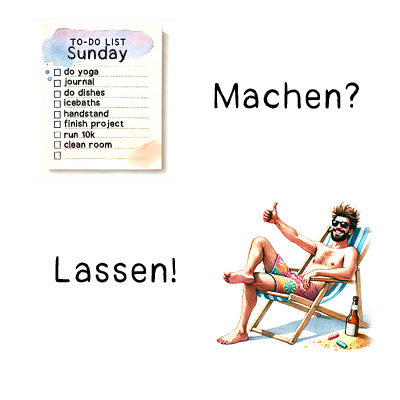
The German 'lassen' translates to 'to let' and 'to leave'. But the uniting theme is 'not doing'. And that can actually explain all the various uses of 'lassen'.

Read article →
What is the Difference - "verwirren vs. verwechseln"

'verwirren' and 'verwechsel' both mean 'to confuse'. But confusing them is confusing. Today, we'll learn what the difference is and when to use which one.

Read article →
How to use "trotzdem" (and "obwohl")

We'll learn how to properly use "trotzdem" and "trotz" in a sentence, explore their translations and check out the difference to "obwohl".

trotzdem, obwohl, der Trotz, trotzen, trotz

Read article →
The meaning of "suchen" (and its prefix versions)

"suchen" means "to search", but its prefix versions are about visiting, trying and choosing and other random things. Today, we'll learn how it all makes sense.

suchen, die Suche, versuchen, der Versuch, aussuchen, durchsuchen, untersuchen, besuchen, der Besuch

Read article →
Word of the Day - "reichen"

A thorough look at the meaning and grammar of "reichen" and what "handing" has to do with "being enough" and "areas".

reichen, ausreichen, erreichen, der Bereich, hinreichend, ausreichend

Read article →
At Least in German - Wenigstens vs Mindestens vs Zumindest

wenigstens, mindestens, zumindest - they all mean "at least" but they're not the same. Today, we'll learn what the differences are and how to use them.

Read article →
The meaning(s) of "vorbei"

A fun look at the meaning of "vorbei" and an end has to do with visits.

vorbei sein, vorbeikommen, vorbeifahren, vorbeibringen

Read article →
The 2 Meanings of "wirken"

A fun look at the meaning of "wirken" and its related words. We'll learn about the difference to "scheinen" and what work has to do with reality :)

wirken, die Wirkung, wirklich, bewirken, die Wirklichkeit

Read article →
The meaning(s) of "kriegen"

A fun look at the meaning of "kriegen". We'll learn what it means by itself and look at all the useful prefix versions. A must have for your vocabulary :)

kriegen, abkriegen, hinkriegen, mitkriegen, aufkriegen, rauskriegen, der Krieg, ...

Read article →
The meaning of "von ... her..."

The combination "von.... her" is super common in everyday German. Today, we'll find out what it means and how to use it. Of course that includes "von daher".

von X her, von daher, was X angeht

Read article →
The meanings of "noch"

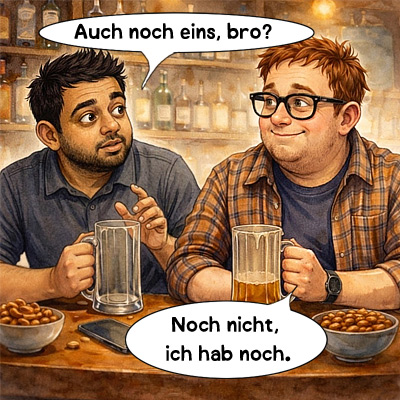
"noch" can mean "still", "yet", "else" and a few other things. But why? Today, we'll find out and see how to use phrases like "noch mal" or "noch nicht".

noch, jetzt, noch nie, noch mal, noch eins, immer noch, nur noch, was noch

Read article →
German Prepositions Explained - "nach"

"nach" can mean "to" and "after". Today, we'll explore the common core of this, and explore the various uses of "nach", both alone and as a prefix.

nach, nachmachen, nachlaufen, nachlassen, nachgehen, nach

Read article →
Word of the Day - "möglich"

A fun look at why "möglich" is the German word for "possible" and what that has to do with the modal verb "mögen". Also, unfunny jokes.

möglich, mögen, unmöglich, die Möglichkeit, möglicherweise, möglichst

Read article →
Disappointed in German - "die Enttäuschung"

Enttäuschung means disappointment. Täuschung is deception. Today, we'll learn why and what it all has to do with trading and barter.

die Enttäuschung, enttäuschen, tauschen, täuschen, handeln

Read article →
Word of the Day - "gar"

"sogar" means "even". But why? Today, we'll learn about the meaning of "gar" and "sogar" and we'll see what those have to do with pasta :)

gar, sogar, gar nichts, garen

Read article →
Word of the Day - "weiter"

"weiter" means "further" and just like "further" in English, it can express the idea of "continuing" something. That's why it's a super common verb prefix.

weiter, weit, soweit, weitermachen, weiterschlafen, weitergeben, weiter so, bis auf Weiteres,

Read article →
The Meanings of "bringen"

"bringen" means "to bring" but in German, it has more meanings than that. And it has many useful prefix versions like beibringen, hinbringen or verbringen.

bringen, beibringen, verbringen, umbringen

Read article →
The meanings of German "so"

A thorough look at the German "so", its various idiomatic uses in everyday German and the differences to English "so". With lots of audio examples.

so, also, so so, so lala, geht so, sowieso, achso

Read article →
Word of the Day - "fehlen"

"fehlen" means "to miss". But only if you use it in the right phrasing. And that's quite different to English. Today, we'll learn how to use it properly.

fehlen, der Fehler, fehlend, unfehlbar

Read article →
"werden" - Future and Passive

We'll explore why the verb "werden" is used for future AND passive voice and how to do it. Also: a really peculiar feature of German passive voice.

Read article →
The meaning of "werden"

"werden" means "to become". And it's used to build the future. Oh, and the passive, too. That's kind of a lot. But it does make sense, once you look at it.

werden, bekommen

Read article →
Word of the Day - "anhalten"

"anhalten" means "to stop". And it also means "to continue". And there's actually a logic to it. Today, we'll find out what and also how and when to use it.

anhalten, aufhören, stoppen, ranhalten, sich ranhalten

Read article →
The meanings of German "eh", "ehe" and "eher"

"eh" mean "anyway", "ehe" means "before" and "eher" can mean "rather" and "earlier". And "die Ehe" is "marriage". Today, we'll explore why and how to use them.

eh, ehe, eher, die Ehe, ehemalig

Read article →
Word of the Day- "ziehen"

The two core ideas of "ziehen" are pulling and moving. They're the base for dozens of important nouns and verbs and... they actually come from the same core.

ziehen, ausziehen, anziehen, abziehen, umziehen, der Zug, der Anzug, ...

Read article →
mögen, gern, gefallen - What is the difference

German has three options for "to like" - mögen, gern and gefallen. Today, we'll find out what the differences are and when to use which one.

mögen, gern, gefallen

Read article →
The meaning of "da"

"da" means "there", "here","because" and "then". Seems a bit random, but if you think of "da" as verbal index finger, you understand why Germans use it so much.

Read article →
Word of the Day - "gewöhnen"

The core idea of "sich gewöhnen" is about "getting used to". Let's find out how to use it and what the difference is between "gewöhnen an" and "angewöhnen"

gewöhnen, sich gewöhnen an, gewöhnlich, die Gewohnheit, sich abgewöhnen, sich angewöhnen, verwöhnen

Read article →
Word of the Day - "los"

'los' can be an ending. Then, it means '-less'. And it can be a prefix. Then, it expresses a sense of starting. And these two ideas are actually related.

los, lose, das Los, los sein, loslassen, losgehen,

Read article →
The meaning of "irgend"

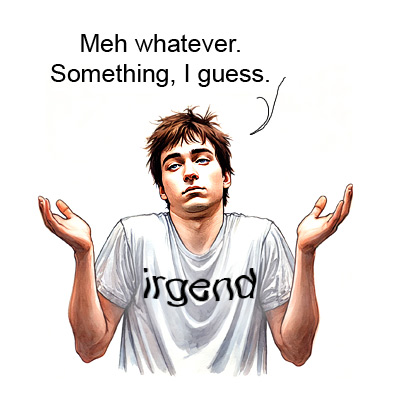
"irgend-" is the German word for "some". So it seems. But it's not that simple. Today, we'll explore irgendwo, irgendwas, irgendwen and so on.

irgendein, irgendwas, irgendwo, irgendwann, irgendwie

Read article →
The meaning of "übrigens"

We'll learn how to use "übrigens" and why it's the German translation for "by the way".

übrig, im Übrigen, übrigens

Read article →
Word of the Day - "der Grund"

"der Grund" is the German brother of "ground". Today, we'll learn where it comes from and how it connects with reason, thoroughness and founding a business.

der Grund, aufgrund, grundsätzlich, gründen,begründen

Read article →
Word of the Day - "dauern"

A fun look at the meaning of "dauern" and how to use it as a translation for "to take time" . Also: some cardio. Condolences :).

dauern, die Dauer, dauernd, andauern, die Ausdauer, während, bedauern,...

Read article →
Word of the Day - "die Zukunft"

A fun look at the meaning of the German words for future, what "Zukunft" has to do with "kommen" and what other cool useful words with "-kunft" there are.

die Zukunft, die Auskunft, die Ankunft, die Herkunft

Read article →
The Particle "mal" Explained

One meaning of "mal" is "once", but in daily life, Germans use it more like a spice that makes their sentence more casual. Today, we'll explore all about that.

mal, noch mal, nicht mal, erstmal, gerade mal, schon mal

Read article →
The meaning of "mal"

The first part of our look at the meaning of "mal". Here, we focus on where "mal" comes from and on its more "conventional" meanings.

Read article →
Word of the Day - "gehen um"

A fun look at the meaning of "umgehen" and what "walking around" has to do with "handling". And also a look at the combo "gehen um" and why it's super useful.

gehen um, umgehen

Read article →
The meaning of "zwar"

"zwar" hard to translate but its essence is not hard to understand: it sets up a "but". Today, we'll learn how to use it and also check out "und zwar".

Read article →
The meaning and use of "was für"

"was... für" is a colloquial German version for "what kind" and it's incredibly common. Time to learn how to use it.

Read article →
The 2 meanings of " ganz"

A fun look at the meanings of "ganz", its super common use as intensifier, a really random twist. And my toilet paper situation #notgood

Read article →
Word of the Day - "paar"

A fun look at the meaning of "paar" and it's brother with a captital P and how to use them as translations for "pair" and "couple". Oh and "few".

paar, das Paar, das Pärchen, Pärchenabend

Read article →
Word of the Day - "freuen"

We'll learn about the core meaning of the verb "freuen" and find out how and when to use "sich freuen auf" and "sich freuen über" with lots of examples.

freuen, sich freuen über, sich freuen auf

Read article →
"haben" and its Prefix Versions

Most of you know that "haben" means "to have". But "haben" also has a lot of really common prefix versions. Today, we'll go over them with lots of examples.

haben, anhaben, aufhaben, abhaben, mithaben, vorhaben

Read article →
The meaning of "schaffen"

A thorough look at the meaning of "schaffen", its various important uses in everyday German and a bunch of really cool related words.

schaffen, geschafft, erschaffen, sich verschaffen, abschaffen, anschaffen, das Geschäft, die Wirtschaft, beschäftigt, die Freundschaft

Read article →
"versprechen" - Prefix Verbs Explained

"versprechen" has maybe the most ironic double meaning ever. Today, we'll find out what it means and how those two connect.

Read article →
Word of the Day - "schenken"

A fun look at the meaning of "schenken" and its rather odd family that connects ham, presents and drinks. Absolute must have.

schenken, das Geschenk, der Schinken, einschenken, verschenken

Read article →
The Meaning of "merken"

"merken" can mean "to notice" and "to remember". But not always. Today, we'll find out when and why and we'll talk about the difference to "bemerken".

merken, sich merken, bemerken, merkwürdig, anmerken, das Merkmal

Read article →
What is the Difference - "antworten vs. beantworten"

The difference between "antworten" and "beantworten" is grammar - "beantworten" takes a direct object while "antworten" works more like "to reply".

antworten, beantworten, die Antwort

Read article →
The meaning and use of "voll"

A quick look at the meanings of "voll" and why "voll leer" actually makes sense in colloquial German.

voll, machtvoll, liebevoll, sinnvoll, komplett

Read article →
The meaning of "einfach"

We'll take a quick look at the real meaning of "einfach" and how to use it as "easy" and "just" and we'll explore a few other words with "-fach" in them.

einfach, mehrfach, vielfach, vervielfachen, vereinfachen

Read article →
Word of the Day - "außer"

"außer" is the German word for "but, except" and it's a bit special when it comes to which case to use. Today, we'll find out and also explore some more vocab.

außer, bis auf, außerdem,

Read article →
The Meaning and Use of "erst"

'erst' means 'first', but that's only half the story. It's also a specific type of "only". Today, we'll explore which 'only' and how to use 'erst' as 'first'.

erst, erste, erstes, erst mal, erst vs schon

Read article →
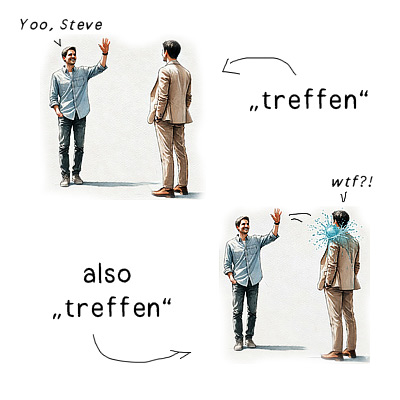
Word of the Day - "treffen"

"treffen" can mean to hit and to meet. But why? And what's the difference between treffen and sich treffen and how do we use them? Today, we'll learn all that.

treffen, sich treffen, der Treffer, der Treffpunkt, treffend, betreffen, antreffen, eintreffen

Read article →
The meaning of "vielleicht"

A quick look at "vielleicht", the German word for "maybe". We'll learn why it means what it means, how to use it and what side use it has.

Read article →
The meaning of German "her"

A thorough look at the confusing German word "her". We'll see what it means and why and learn how to use it properly with lots of examples.

Read article →
Word of the Day - "aufwachen"

Today, we'll learn the difference between "aufwachen" and "(auf)wecken" and see when to use which. Special guest: "erwachen"

aufwachen, aufwecken, erwachen, wachen, die Wache

Read article →
The meaning and use of - "aussehen"

The German word for "look" in the sense of appearance is "aussehen". Today, we'll learn how to use it and the different ways to say "look like" in German.

aussehen, das Aussehen, aussehend

Read article →
German Word of the Day - "neugierig"

A fun look at the meaning of "neugierig" and what curiosity has to do with greed.

neugierig, die Neugier, vergesslich, neu

Read article →
Word of the Day - "sauer"

A fun look at the meaning of "sauer" and why it means "sour" and "angry".

sauer, ärgelich, salizg, süß, bitter

Read article →
The meaning of "als"

"als" is a must-have word and has three important functions in German - "when", "than" and "as". Today, we'll find out how to use it and what to watch out for.

als, wenn, wie

Read article →
The meaning of "ob"

A quick look at the meaning of "ob", a quick hack to know if it's a translation for "if" and a longer analysis, for nerds :)

Read article →
The 3 meanings of "doch"

"doch" has three core functions - reverting a "no", toning down commands and most importantly: seeking affirmation. That's the one most of you are looking for.

Read article →
The meaning of "nerven"

A quick look at the German verb "nerven" and how to use it in daily life.

nerven, nervig, genervt

Read article →
Word of the Day - "komisch"

A quick look at the meaning of "komisch" in German and why something that sounds "komisch" most likely isn't actually funny.

Read article →
The meaning of "sondern"

"sondern" and "aber" are both translations for "but". Today, we'll learn, what idea "sondern" expresses and what the difference is to "aber".

Read article →
Word of the Day - "satt"

A quick look at "satt" and how to say that you're full and that you're fed up in German.

Read article →
Word of the Day - "die Langeweile"

A 110% non-boring look at the German word for boredom, why it's important not to say you're "langweilig" and a couple of glances at die Laune and die Stimmung.

die Langeweile, gelangweilt, langweilig, die Stimmung, die Laune

Read article →
The meaning of German "alle"

A fun look at the meaning of "alle" and how one word can be "empty" and "all" at the same time. And we'll learn when to use "alle" and "ganze".

alle, ganze, alles in allem, all die

Read article →
The meaning and use of "aufhören"

"aufhören" means "to stop". But why? And what's the difference to "anhalten"? All that we'll find out in this article.

aufhören, anhalten, hören, horchen, aufhorchen

Read article →
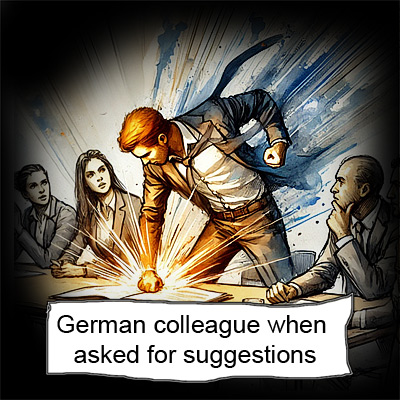
Prefix Verbs Explained - "vorschlagen"

We'll take a quick look at the meaning of "vorschlagen" and why the Germans punch their proposals.

Read article →
The meanings of "gleich"

A fun look at the meanings of "gleich" and why it's "equal" and "immediately" at the same time. And the difference between das Gleiche vs dasselbe.

Read article →
The meaning of "vorstellen"

"vorstellen" means "to introduce" and "to imagine". Today, we'll learn how that makes sense and how to use it for both meanings.

Read article →
Word of the Day - "liegen"

A fun look at the various meanings of "liegen" and how to use the super common phrasing "liegen an".

Read article →
The meaning of "nachdenken"

"nachdenken über" means to think in a sense of pondering, "denken (an)" is about thinking in a more general sense. Today, we'll explore the use of both.

Read article →
The meaning of "weder... noch"

A quick look at how to use "weder... noch" ("neither ... nor") in German. And a look at the other translations for "neither". With lots of examples.

Read article →
Word of the Day - "der Feierabend"

"Feierabend" is one of the best things ever. But English doesn't even have a word for it. A fun look at what it means and how to use it :)

feiern, der Feierabend, der Abend, das Feierabendbier

Read article →
The meaning of "entweder ... oder ... "

"either or" in German is "entweder oder" in German. Here's a quick look at how to use it.

Read article →
The Meaning (and Use) of "einfallen"

"einfallen" is one of the main German words for having an idea, but the usage is a bit tricky. Today, we'll explore and we'll also talk about "reinfallen".

einfallen, der Einfall, einfallsreich, reinfallen

Read article →
The meaning of "Liebling"

If you want to say "my favorite" in German, you need "Liebling". But there are some important differences that learners often get wrong.

lieb, der Liebling, Lieblings-, der Schatz

Read article →
Using "Je... desto" in German

'Je ... desto' is the German version of English 'the... the'. The bad news is that word order is a bit tricky. The good news is cases don't matter.

je, desto, umso

Read article →
"to be" in German - Conjugation and Usage of "sein"

"sein" is the German verb for "to be". And just like "to be" it's quite irregular. Today, we'll learn how to conjugate it and also WHY it's so messy.

Read article →
Subscribe for free


My German Learning Newsletter

Once a week (or so).

We don’t spam! Read our privacy policy for more info.