“Raw Fibre”
***
Hello everyone,
and welcome to door number 12 of the German learning Advent calendar. Half time.
And today, I want to tell you about an important part of German culture that is kind of flying under the radar, but it might actually be even more prevalent than Wurst and Bier. In fact, if you’re in Germany, you might be surrounded by it right now.
I am talking about … drumroll please…
die Raufasertapete
The one and only!
Well, okay… not really the one and only. There are many different types of it.
But what is it?
Well, the first part of the word literally translate to “rough fibre”, but that doesn’t really help much. The key to the word is the last element, which is die Tapete. And that is the German word for wallpaper. In the sense of the paper you’d actually stick on your walls, NOT the wallpaper on your computer. That’s called … Wallpaper. Or Desktophintergrund, if you want to break your tongue.
But yeah, so Tapete is wallpaper and the other parts of Raufasertapete is a special kind. This one:
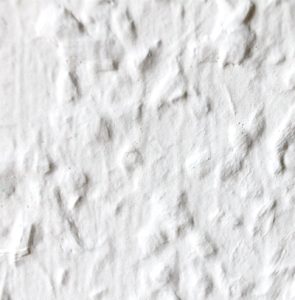
Hmmm, okay, that actually kind of looks like modern art or something. Maybe I should try and sell that on Etsy. Hold on, let me add some artsy element or something…

Amazing!! So design!Took me 80 hours to perfect. I can totally see that in some hipster condo in New York as a large printout. Or a signed hardcopy. And they invite me over there, and I drink a Manhattan Cocktail while looking at the skyline and then this beautiful woman shows up and we start talking.
“Emanuel… EMANUEL!! Are you going to continue the actual article?”
Oh… oh, I’m sorry. I… I was daydreaming.
So, back to Rausfasertapete, sigh.
Here it is in action:
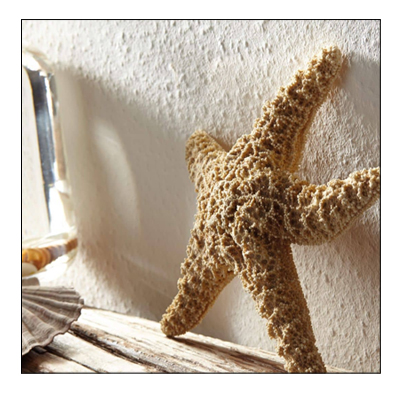
The English word for it is woodchip wallpaper and it’s basically a wallpaper that is made from actual paper, with tiny woodchips in it that make your wall look like your skin after you touched stinging nettle.
And the thing is… this wallpaper is SUPER common in Germany. It’s like pretty much the default wall covering, at least in big cities.
Like… I’d say 80-90% of the apartments in Berlin that I’ve been in had this wallpaper and it’s only recently that I have even started questioning this, like “Do I actually WANT this on my wall.”
So why is Raufasertapete so common in Germany?
Well, it was invented in Germany about 100 years ago and it’s apparently quite cheap to produce and hence also really really affordable, so it spread rapidly.
It’s also environmentally friendly, as you can make it from recycled paper and sawmill leftovers and doesn’t contain any weird chemicals, though that probably wasn’t as much of a concern a few decades ago.
What’s more important is that it’s very easy to paint over multiple times, and that is important in Germany because we’re a nation of renters. In a city like Berlin, about 84% of people RENT. You’re of course free to paint your apartment walls however you want, while you live there, but when you move out, you have to make it white again, so it’s “neutral”. So there are lots of coats of paint accumulating over the years, and you wouldn’t want them directly on the wall. It’s much better to have wallpaper, which you can replace after every 4 or 5 paint jobs.
And why not just smooth wallpaper without these weird pimples?
Well, I guess there was a period, where this was legit considered beautiful, and then it just kind of “stuck around”… haha.
But another point is that this slight 3D surface helps hide the bumpiness of the walls better. And that is actually a big deal, because the average wall in an old Berlin building is NOT even at all. There are all kinds of dents and dings and badly filled drill holes from the renter before and so on.
Like… the stats are actually crazy. If you take the average living room wall and actually flattened it out completely, the surface area it would cover would actually be roughly the size of Arkansas.
Nah, I’m kidding of course. It’s not that bad. But it is bad. And if you were to put super smooth, silky wallpaper over such a wall, you’d see ALL the dents. Like… they really don’t have to be big or crazy or anything, but you’ll have shading in all kinds of ways. The smoother the wall, the more any inconsistency will stick out.
Raufasertapete is INCREDIBLY forgiving about that.
Apperantly, it’s falling a bit out of fashion in recent years, and I am not sure how common it is in actual single family houses. But at least in big cities, it’s still pretty much everywhere and I don’t think it’s going to go away any time soon and it’s definitely one of the things that you WILL encounter in Germany that, depending on where you’re from, you may not have ever seen before in your life.
So there you have it. A piece of German and Austrian culture… Raufasertapete :).
Let me know in the comments about your experiences with it. Have you “lived in it”? And what did you think when you first saw it? Did you notice how common it is?
And of course also let me know if you have it in your homecountry and how widespread it is there. Maybe it’s not such a German thing after all.
I’m really excited to read your thoughts, so let me know.
I really hope you enjoyed this one, have a great day and I’ll see you tomorrow.

 Audio Speed
 Dark Mode
My oral German is decent (even if I don’t know the words) but Raufasertapete baffles me. The “Raufaser” is good to go, but “tapete” looks out of place.
Reminds me of this great song by British band Pulp – Disco 2000. Have a listen.
Wow, I know the song of course, but I never knew what woodchip was until now :)
There is “popcorn ceiling” in the US but that may be a different thing. Kind of Raufasertapete on steroids. Now I live in Paris and I think I live with a kind of mild version of it in my rented apartment here!
It’s just the same in England, it is everywhere in rented accommodation. Especially council housing. It’s great… Until you want to get rid of it. That was my job as a child, steamer and scrapper!
A friend told me that you can easily make it come off with window cleaner. You just spray it on, and indeed it works fairly well.
Boah! “Popcorn Ceiling” an den Wänden als Tapete. Genial!
Also…was ist passiert bei dir und deine sexychica in New York?
Lassen uns hangen nicht!
I have not seen the wallpaper here in America, but I have seen the spray-on texture that then gets painted over. It is as JCGreff mentioned below. Here is a link to a home improvement store page with examples of the equipment.
Here are some pics
Link seems to be broken (I get access denied).
I think it is a geo-fence based on IP address. The link is working for me in the U.S.A. I saw an access denied message/error when trying to view news for some American cities when overseas. I do not seem to be able to edit the post still, to delete the link, like I can with this one that I just added this sentence to.
I don’t know what’s going on, to be honest. I can’t even access the homedepot homepage from search.
Comment editing is possible for half an hour, but don’t worry about it too much. I’ll change the link to something that works.
Danke. Geofencing – https://de.wikipedia.org/wiki/Geofencing. Wahrscheinlich kann man die HomeDepot Seite nur mit amerikanischen IP-Addressen sehen. Es ist ähnlich wie Netflix insofern als manchmal Serien verfügbar nur in bestimmte Orte sind.
Interesting article because I often wonder about such things – what walls and floors are actually like in foreign cities. I did have experience with it right here in ethnic neighborhoods in Detroit, Michigan – red floorboards and stucco walls as well as ceilings – but reading this article made me realize just how much this type of decor is a “thing” abroad. By the way, I spent close to 5 decades of my adult life renting. It is much easier, cheaper and more practical for me.
It does have pros and cons for sure. One thing I like about renting is that you can leave if your neighbors suck really bad. I wouldn’t want to be stuck with a property where the neighbor is an absolute asshole.
yeah I know what this is cus years back a few german collegues were thinking up words that would be a challenge for me to pronounce when we were having afterwork beers. This was one of them along with Flussfahrtschiffcaptitainsmützte.
I actually don’t have a Berlin association with Raufasertapete though. What I do associate with Berlin is the old red floors painted in appartments. I looked at a few flats with them when I was on the flathunt 6 or so years ago or so. I never lived in one but when i first moved here I did live in a building that had a red floor in the communal stairwell. Think that wasn’t floorboards though.
I hate those floors man.
A few years ago my wife and I spent 2 weeks in Germany renovating an 8 room apartment for Ukrainian refugees. Nearly all of the walls were covered in this stuff. Two rooms required some patching & replastering. Another room had to be covered with new wallboard. Then we had to paint, but first we had to put this wall paper up.
Wall paper is not so common in the US as earlier, so I was out of practice. Had never seen this stuff before. Kind of flimsy and strange to work with. The bubbles seemed so odd. Took a while, but I really came to appreciate it. Since there is no real pattern, it was easy to use as a patch. Matching seams was not difficult. Painting was also a new experience. The paper got very soft (even the original, already painted stuff). We were afraid it would warp before drying, but no – it seemed to hold up.
The most amazing part was as you said – it covers a lot of sins. We had asked for sandpaper to smooth out the patches on the wallboard. The Stadt Baumeister told us not to worry about same. I was aghast! We almost always have to apply multiple coats of mud followed by sanding to make a wall repair look good. After application of die Raufasertapete und Farbe you couldn’t tell there were any flaws underneath.
Thanks for bringing back some wonderful memories, und vielen Dank für den super schöne Advenstcalendar!
“A few years ago my wife and I spent 2 weeks in Germany renovating an 8 room apartment for Ukrainian refugees. ”
This sounds like a really interesting story :D. So random somehow.
What I have noticed since watching interior design channels from US and Canada, is that in Germany, it’s REALLY hard to get peel and stick wallpaper while over there, it seems to be super common. None of the hardware stores (Bauhaus, Hellweg, Obi, Toom) had them here. But loads and loads of different types of Rauhfaser.
So that’s what this stuff on my walls is called! We’re renting the top half of a house in a smaller city (100.000 inhabitants). The previous renters didn’t paint though, so I had to have it done (sauteuer), and the landlord and I agreed that I don’t have to paint when we move out. He died of lung cancer though, hopefully his widow honors that. My deposit is worth less than it would cost to paint it again.
Did you get that in writing :)?
Ja, denn damals sprach ich kein Deutsch und ich konnte nur mit E-Mail, und Google Translate, kommunizieren.
Perfekt! Thss is the way with German rental related things.
Interesting, but a bit light on the German? Please be rude about things in German – we need the practice :-)
Nach feuchter Spätabendsweihnachtsfeier in einer Mietbau-PLATTE Ostereier
O WEH ! war Tatsache
die
ein raüdiger Klepper angerichtet HATTE
die Wand durch gerammt lasst ein Einhörner Loch hinter.
Es wurde schnellstmöglich weg
mittels
KITTIKLEB und Holzfaserblätter
Yes, in England it was common to use the brand name Anaglypta for this, although I think the brand actually made all sorts of textured wallpaper.
Super common in Scotland – inside wallpaper – and a similar bumpy, harder outside painted effect (“Snowcem”, snow-cement). I was naughty and picked some bits of chips out with my nails!
I really did enjoy this one!
Any name for the scratched finish mostly seen in exterior walls here in Berlin? I had it in my living room, it’s sole purpose was to suck up the two hours of natural light in winter. Raufasertapete would have been a blessing. I plastered it up, took a week to do but it’s still holding so happy I did it.
So maybe “Kratzputz”, so that tends to be more fine grained. I found some examples for your version under “Fassadenputz”, but there are different versions and no idea of there’s a name for yours with those floral elements :)
I think I’ve seen this fairly often in France as well. Always wondered what that stuff was . Thanks for the article !
I haven’t seen it in the US, or if I have I didn’t know it. Lots of wallpaper, paneling, and such, but by far the most common thing has to be drywall with a coat of paint. And if course, that brings up texture. There’s flat, orange peel, and popcorn. Flat is of course flat, orange peel is a very thin but widespread bump, and popcorn is a very sharp raised bump. The texture is essentially just mud applied by a machine and then you paint over it. Texture is frequently applied to the ceiling and less frequently applied to walls. A few decades ago popcorn was the in style and now everyone wants to get rid of it.
Anyway. Interesting parallels.
Yep, never heard of it in USA but for a while “stucco ceilings” were popular and what a PAIN those are to get rid of.
die Raufasertapete! Yes, interesting. It used to be quite widespread in England, but the English version looked a bit more like uncooked flakes of porridge, or just oats , spread evenly over the wall. It‘s out of fashion now, and it was always a utilitarian choice, and considered rather infra dig! I think the German version looks a little more interesting – if flock wallpaper ever can be! Thanks for the history of it in Deutschland.
There are definitely different kinds, with varying grain and some of them definitely do look like oats :)
Maybe the only type of wallpaper to feature in a song? Pulp’s Disco 2000:
Oh, Deborah, do you recall?
Your house was very small, with woodchip on the wall
When I came ’round to call, you didn’t notice me at all
And I said
“Let’s all meet up in the year 2000
I’m a big fan of both the wallpaper and the Band, and still resort to it for decorating here in the UK. Mind you, I’m 66 and so not über trendy!