Knowing relations between words can help understand their meanings and build a more connected vocabulary network. Here, you can explore parents and offspring and discover the whole family.
Click a word to move it to the center. “Open entry” shows its meanings and examples.
Sources for Etymology:
- Check "vor" on DWDS.de
Biggest German Dictionary, great for etymology, usage frequency and collocations) - "vor" on Wiktionary (English version)
(For etymological connections across European languages. Not always accurate) - Etymonline.com - Origins of English words
My favorite source for the origin of English words.




 Audio Speed
 Dark Mode
Only for your consideration, while looking at the meaning and use of ‘erschrecken’, I learned that the preposition ‘vor’ can also mean ‘from’ or ‘against’ (a threat or negative outcome), “sich+Acc erschrecken vor”: “Ich hab mich gestern vor der Spinne erschrocken. I got a scare from the spider yesterday.”
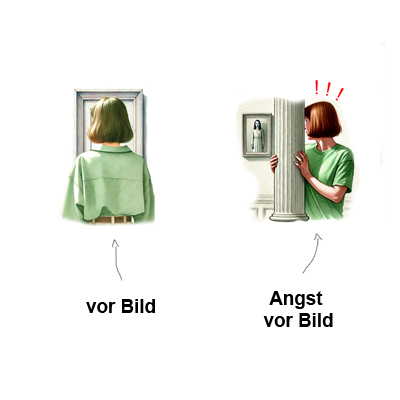
Good point, I forgot to add this to the note. With verbs in fixed combos, “vor” is often used in combos that are about facing some danger or challenge. Angst haben vor, waren vor, Respekt haben vor, erschrecken vor, weglaufen vor… The common theme is that you’re “in front” of the challenge. I added that to the note now. I talk more about it in the article on “vor” but happy to answer questions here too.