and welcome to your German Word of the Day. And by “word” I mean “test” because it’s surprise exam time! Phones away, pens out. This one counts for the final grade. N-Deklination, Passiversatzformen and Pronomenreziprozitätsreduktion are on the menu. “Booooohhhh.” Nah, I’m kidding of course. It’s not really a test, it’s a fun quiz. “Uh… mehhhhhhh.” Or as I like to call it… a Quiz-planation™. Because I’m not just going to ask you a bunch of questions, I’ll actually give you some explanation and trivia for each answer. “Oh… hmmm, interesting.” And today, we’ll do an especially fun topic because today, we’ll learn a few
Useful German Expressions
“Hooray!!” We did one quiz like this already in January during our quiz special, and it’s more than time for a new round. So let’s dive right in.
Like last time, I’ll give you a German expression or figure of speech along with an example and you’ll have to figure out what it means. I tried to make it not too easy today, and you’ll see that more than one of the answer options sounds reasonable. So you’ll have to look for little clues in the example that might “set the tone”, so to speak :).
Don’t worry if you make a mistake. Like I said, I tried to make it tricky. And then, along with the answer, I’ll give you some trivia about the expression, like where it comes from and what to pay attention to when using it, and I’ll also give you a translation of the example.
So… enjoy!!
Time limit: 0
Quiz Summary
0 of 7 Questions completed
Questions:
Information
You have already completed the quiz before. Hence you can not start it again.
Let’s start with something that may feel familiar. Too familiar, possibly.
“weit hergeholt“
The literal translation of this is “far fetched”. But is that REALLY the meaning?
Das Beispiel mit dem Einhorn im Stadtpark ist ein bisschen weit hergeholt.
Correct
Incorrect
Question 2 of 7
2. Question
“auch nur mit Wasser kochen“
Translated literally, it means “also only cook with water”.
Example:
Du bist besser als du denkst, andere Leute kochen auch nur mit Wasser.
Correct
Incorrect
Question 3 of 7
3. Question
“als Tiger gestartet, als Bettvorleger gelandet“
The choke point in understanding the words is certainly Bettvorleger. As soon as you know that that is a bedside rug, the expression is fairly intuitive.
Example:
Die Steuerreform – als Tiger gestartet, als Bettvorleger gelandet. (tax-reform)
Correct
Incorrect
Question 4 of 7
4. Question
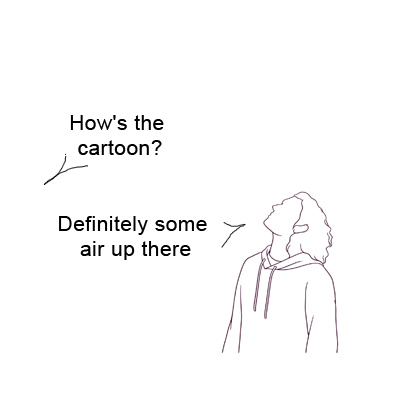
“Luft nach oben“
Literally, it translates to “air toward above“, but what’s the actual meaning?
Example:
Bei den Sängern ist noch Luft nach oben.
Correct
Incorrect
Question 5 of 7
5. Question
“die Zwickmühle“
If you translate it literally, you get “pinch mill“. Which doesn’t sound very pleasant, but what is it, exactly?
Example:
Wenn ich nicht zur Party gehe, ist Maria sauer. Wenn ich zur Party gehe, ist Christina sauer… ich bin echt in der Zwickmühle.
Correct
Incorrect
Question 6 of 7
6. Question
“durch die Lappen gehen“
The literal translation would be “go through the rags”… which sounds like going through old laundry. But is that the real meaning?
Example:
Maria denkt, dass ihr mit Thomas vielleicht ein toller Mann durch die Lappen gegangen ist.
Correct
Incorrect
Question 7 of 7
7. Question
“auf die Palme bringen“
A Palmeis a palm tree, so the literal translation is “bringing up the palm tree”. But what could that mean?
Example:
Mein Chef hat mich mit seinen dummen Motivationssprüchen im Meeting heute richtig auf die Palme gebracht.
Correct
Incorrect
And, how’d you do? Unless you crushed it with 100% I’d really recommend doing this quiz again in a couple of days, just to imprint all of them firmly in memory. Except the tiger-one they’re all really useful and worth adding to your active vocabulary.
Let me know in the comments, which one threw you off and which one is your favorite. And of course, if you have any questions about any of the examples, let me know and I’ll do my best to clear it up.
I really hope you enjoyed this, have a great week and see you next time.
Semi. “Zwickmühle” doesn’t sound as “negative” or “under pressure” as “between a rock and a hard place”. Like… someone might use it when having to choose between two festivals on the same weekend, both of which each feature an artist you really don’t want to miss.
Ara Amirjanyan
Thank You for Your informative and insightful messages!
I am a beginner in learning German and just stumbled upon “wider Erwarten” as “contrary to expectations”, but I couldn’t locate “Erwarten” in online dictionaries as a noun: only “Erwartungen”. Could You, please, clarify this to me? Is this another legitimate form of a noun, equal to “Erwartungen” to say “Erwarten”? Are they interchangeable?
ANY verb in German can be made a noun by adding “das” and capitalizing it.
– das Backen, das Lesen, das Erwarten
The meaning is roughly “the act of verbing”.
So “das Erwarten” technically is the act of waiting and expecting, NOT the actual expectation. In this particular phrase that you mentioned, it does lean that way though. “Erwartung” would make sense, too. It just happened to not be idiomatic.
Hope that helps!
Andre Sena
Great article! Also here to be thankful for the opportunity that Emanuel and sponsors gave to me a free scholarship. I am sure it will improves a lot my german and one day I will be sponsor for other people!
Mustafamu
Thank you very much Emanuel give me free scholarship for one year,I really appreciate this.
I can see the preview but the link won’t open. Any idea why? Anyway, great depiction :).
Osama
Thanl you very much Emanuel for this amazing way to teach German. In fact, the only blog where teaching is coming from the heart. I would thank you again for exempting me from fees. BTW, the picture you make for thes idioms are outstanding
Glad you enjoyed it! Schön, dass es dir Spaß gemacht hat!
tianlez
Hello YourDailyGerman learning community. I wanted to take the time to express my gratitude towards everybody who’s been generous enough to have contributed towards sponsoring a membership. Thanks to your help, I’m able to use the website’s resources for a year! I’m planning to study German philosophy in graduate school, so this will be a great help for my future :)
Emrullah
Hello Emanuel and dear friends Enjoyable and productive content keeps coming for us :) I am grateful to Emanuel and the site sponsors for providing me with the opportunity to use this beautiful site. Best wishes to all of you..
pmccann
6/7 first time through (sucked in by the first question, thought it had to be a trick. And, yeah, it was: the trick was the lack of tricksiness…). But repeated it today and all’s well with the world. The tiger one is easily my favourite of the bunch, and nice and easy to remember if you think of the poor beast landing *kersplat* on the floor. Of the rest I was familiar with about three of them, but they’ve not really *stuck* as yet. Soon to be remedied!
Oh wow, I haven’t heard these in decades, but I did recognize them from way back when :D. I think I’ll try to use them again, when a friend spills beer or so. I like all the “insults” with Hans/Hannes and Liese.
Be careful though that he or she doesn’t start snickering when you do. You might well date yourself:-)
Janea
durch die Lappen gehen – I now have the image of deer running through rags in the forest – which might just influence how I’ll be (mis)translating it! Loved the quiz though. We didn’t do useful stuff like this at school.
Or: “Ich bin der Polizei entkommen/aus den Fesseln entschluepft.” etc. It certainly is a most visual idiom and the cartoon of the deer in the background with the hunter is wonderful!
John
Great stuff! I would love to see more of these. Very helpful to know common phrases so we can sound like semi-native speakers when traveling through the country.
Hallo Some typos first (only found two) And by “word” is mean “test” (And by “word” I mean “test”) far-fetched has a hyphen
I really love these quizzes, I got them all correct because the right meanings felt intuitive to me, although the only one I actually knew was “auf die Palme bringen”. But I found the “durch die Lappen gehen” difficult to understand. In the example, does it mean that Maria lost Thomas or does it mean that she missed out on finding a great man for being with a loser like Thomas?!?
Nice to know you’re in Iceland, I’ve never been (not a big fan of islands, unless they’re close to some stretch of land, I was actually thinking of going to Sylt, would you recommend it?), but you seem to be having a great time, so enjoy :))))
The core idea is that you don’t end up getting/catching something desired. So in the quiz, she thinks that maybe she has lost out on a great man (Thomas). I totally get your logic though. The “mit” is confusing. But for Thomas as the reason for missing out on someone else, the preposition would be “wegen”.
And now a round of “calling out Brits”:
“not a big fan of islands, unless they’re close to some stretch of land,”
Iceland is almost half the size of the main Island United Kingdom ;). So you kind of are from an Island. Unless of course you like the proximity to France and that’s the game changer for you :D. Seriously though, Iceland does feel like an Island because virtually all settlements are along the cost.
I’ve never been to Sylt, but it’s a bit fancy. I don’t know if you specifically want Northern Sea with the tides, but I would recommend going to Rügen instead. It’s beautiful, diverse landscape, famous paintings come from there and they have amazing bike infrastructure. The central east and south east is like five different landscapes in a nutshell (Ireland, Baltic Sea, ancient beech forest, chalk cliffs and bodden.
Sylt is pretty much one type of landscape as far as I know and you can get it anywhere in Denmark. East Rügen is way more unique and one of the places I keep returning to. Also nice is “Prerow” on Darss because of the forest and wandering beach. And Hiddensee, which is an island without cars. Never been there though.
Well worth a trip, though even in summer, it can get rather brisk outside, particularly at the beach.
The people are a little frostier on the surface than they are in, say, Berlin for example, or in the South of Germany, but the landscape is lovely and perfect for bicycling around.
It’s definitely on my bucket list. There’s a lot of Germany actually that I haven’t seen.
steepedrostee
Very nice pic of a rugged man among rugged scenery. We’re just back from Scotland, and along with liberal use of “kirk” and “minster”, there seem more olde type English words in use up there. Could be the whiskey talkin.
I was thinkin bout “Lappen” after the quiz – always good fun by the way these quizzs are – and of course all Germanic langs have a common root, though English now focuses only on the lap area of the skirt or garment.
And to lap, as in drinking by tongue/licking, seems to be from a different base… Löffel comes from that variant.
I’m studying for the written driver’s license test – thoughts & prayers welcome – and your site is a fine distraction (along with the brown sauce).
My understanding is Scots and modern british english split off from the same form of early english centuries ago so it would make sense to me that there might be old english words preserved in Scots that are no longer in use in standard british english. I’d be facinated to know more about Scots and languages in Scotland in general. There’s this whole debate around whats a dialect and whats a language, then you also have scottish gaelic as well which is a whole other thing…
Apparently still evident in North English place names, e.g. “Visby”, “Grimthorp” etc. Don’t recall precisely when the last Norn speaker passed, but it seems that it was spoken until at least mid-20th century.
In Yorkshire dialect, “to lake” was used meaning “to play”, similar to modern Swedish “att leka”, etc.
ah interesting. I know nothing about Yorkshire dialect. English dialects were hyper location specfic apparently. I heard you’d be able to tell what village or town someone came from based on how they spoke..
Not to dissimilar from certain Swabian communities! In Nuertingen, for example, “three” is pronounced “dru”, however in Haigerloch, “drie”, and so a native Swabian from the “Schwaebische Alb” will generally recognize immediately where their neighbor is from:-)
Thoughts and prayers sent! Seriously, are you using an app for the training? I did and it was soooooo good. I passed first try (3 years ago) and never felt like I actually studied.
But should you fail…apperantly 50% of Berliners fail the exam the first time, so it’s normal. Are you taking it in German or English`?
auf deutsch natürlich ;) will definitely check out the app, picked up a used study book for €7. Now I know what those yellow diamond signs mean. I should have “converted” my license six months after residency began; certain US states have agreements where there’s no need for any exams. No luck there. Due to my delinquency, I heard the Beamter *may* force me into also taking a driving test. And they routinely cut up still-valid foreign licenses unless you share a secret password. and Schade that the olde Lappen will eventually be no more.
I like old books for study, but NOT for this topic. The apps (there are several, find the one you like best), gives you explanations, tracking and also videos which are part of the test.
Normally, the older the textbook, the more thorough and structured the lessons, but it’s also true that they’re often hopelessly out of date, such as in vernacular or slang usage! Don’t you agree?
Absolutely! Though I don’t actually want my textbook to teach me that. For me, a textbook should teach me the grammar and structures and leave the rest for teachers or the web.
I agree! Although a good textbook can in fact provide conversation starters and instigate stimulating discussion as well.
Jeffrey
I got all 7 from context, but I only knew “luft nach oben” and “auf die Palme bringen” from actual experience. My son knew “in der Zwickmühle”, but I didn’t believe him that his friends use it in a board game. The English equivalents tend to be used only in more dramatic situations.
Those don’t really feel the same to me, and I’m really hesitant about using these kinds of expressions. I work with people who seem like they speak flawless English, until they try to use one of these kinds of expressions and it is totally misplaced.
The operative word here though is “seem”! I’d go for broke in your position and just use them, albeit judiciiously, or you’ll never move forward.
As my grandfather used to tell me as a boy when I was learning French in school, tongue tied about speaking to our seemingly bilingual visitors from Marseille: “Na, Junge, wer nicht mal ins Wasser traut, lernt nie schwimmen.”
Error in my post! The phrase is “…wer SICH nicht mal ins Wasser traut, lernt nie schwimmen.” Just a silly typo (Fluechtigkeitsfehler), that’s all. Apologies.
Es gibt immer Luft nach oben beim Sprache Lernen :D
mikehinton
5/7 correct. I tried to read something ‘special’ into “weit hergeholt” but it’s not that ‘weit hergeholt’. The meaning of “durch die Lappen gehen” also escaped me but I’d say it was one my favorites because of the origin, along with “die Zwickmühle” – an Americam expression is ‘between a rock and a hard place’, same thing only different.
“sich in der Zwickmuehler befinden” = to be on the horns of a dilemma”zwischen zwei Stuehlen sitzen” = to be between a rock and a hard place”zwischen Baum und Borke sein” = be in a (tough) spot Such expressions are notoriously difficult to translate as the image in German is often quite different from English…and of course vice versa.
To me, “in einer Zwickmühle sein” is not always negative. It can be having to decide which date to go to for example. So I don’t think “between a rock and a hard place” is a good fit. Curious if you as a native speaker feel the same.
Indeed! “(sich) in EINER Zwickmuehle sein (befinden) to me means again “to be on the horns of a dilemma”, or, unable to decide something. “Zwischen zwei Stuehlen sitzen” to be almost BETWEEN two objects, literally, “two chairs”, that is, between the proverbial rock and a hard place. Did I answer your question sort of?
In German, you have to be a little more specific than in English, I’ve found. For example, “There’s room for improvement.” is perfectly acceptable in English, as is. However, in German (as in most instances generally), we have to qualify a bit.
“How’s my German, Emanuel?” – Was macht mein Deutsch, Emanuel? “Well frankly, there’s room for improvement.” – Nun um ganz ehrlich zu sagen, ist es schon verbesserungsfaehig.
The German sentence literally means “To be perfectly honest, it is [already] capable of improvement.”, somewhat more exact, if formally direct, than in English.
Often my students tell me that German somehow feels almost more “sarcastic” than English. I suppose they mean than there’s usually less wiggle room in German, though as a German native speaker, again, I really couldn’t judge.
I’m not sure if I follow here. To me, just saying “Verbesserungsfähig” as a reply is perfectly idiomatic. Your version adds some “padding”, but it’s not really more specific. What do you mean by “qualify”?
I guess I meant that frequently German appears more precise to a majority of my native English speaking students, especially from the US, often having had little to zero foreign language background prior to their first semester of German.
“Specific” might well have been the incorrect word choice. Appreciate the follow up though.
Being a first language German speaker too, occasionally I’m at a slight loss how to explain certain points which for us are simply second nature:-)
A fascinating point definitely worth pursuing.
xv
I appreciate the challenge! Love the tiger one. I only knew one of these so even though i guessed a couple i’m gonna give myself 1/7 today.. : )

 Audio Speed
 Dark Mode
In der Zwickmühle. Is this similar to the English phrase, Between a rock and a hard place, or damned if I do and damned if I don’t
Semi.
“Zwickmühle” doesn’t sound as “negative” or “under pressure” as “between a rock and a hard place”. Like… someone might use it when having to choose between two festivals on the same weekend, both of which each feature an artist you really don’t want to miss.
Thank You for Your informative and insightful messages!
I am a beginner in learning German and just stumbled upon “wider Erwarten” as “contrary to expectations”, but I couldn’t locate “Erwarten” in online dictionaries as a noun: only “Erwartungen”. Could You, please, clarify this to me? Is this another legitimate form of a noun, equal to “Erwartungen” to say “Erwarten”? Are they interchangeable?
Thank You in advance with all respect.
Nice question.
ANY verb in German can be made a noun by adding “das” and capitalizing it.
– das Backen, das Lesen, das Erwarten
The meaning is roughly “the act of verbing”.
So “das Erwarten” technically is the act of waiting and expecting, NOT the actual expectation. In this particular phrase that you mentioned, it does lean that way though. “Erwartung” would make sense, too. It just happened to not be idiomatic.
Hope that helps!
Great article!
Also here to be thankful for the opportunity that Emanuel and sponsors gave to me a free scholarship. I am sure it will improves a lot my german and one day I will be sponsor for other people!
Thank you very much Emanuel give me free scholarship for one year,I really appreciate this.
This is agreat picture developed byAI to imagine : “der Hirsch ist dem Jäger durch die Lappen gegangen” https://www.bing.com/images/create/a-frustrated-hunter-watching-a-deer-slip-away-thro/1-66440832c37d4558bddbdf7dc4c20d81?id=HIb3ONagvQB1Pr7PYhUq%2Bw.X69014Fi9w4E0lf1lwgjgQ&view=detailv2&idpp=genimg&noidpclose=1&thid=OIG4.YKhPtP4qN8TdON0ZgpBW&form=SYDBIC&ssp=1&darkschemeovr=1&safesearch=moderate&setlang=de&cc=EG&pc=SANSAAND
I can see the preview but the link won’t open. Any idea why? Anyway, great depiction :).
Thanl you very much Emanuel for this amazing way to teach German. In fact, the only blog where teaching is coming from the heart. I would thank you again for exempting me from fees. BTW, the picture you make for thes idioms are outstanding
Thanks so much for this feedback!! Made me really happy to read!
I have no idea. Maybe this will work : https://drive.google.com/file/d/18IPTOuKj7SXSerlDiO7J5yr9Icl0Huwq/view?usp=drivesdk
Thank you for putting this together. It was a lot of fun and educational!
Glad you enjoyed it! Schön, dass es dir Spaß gemacht hat!
Hello YourDailyGerman learning community. I wanted to take the time to express my gratitude towards everybody who’s been generous enough to have contributed towards sponsoring a membership. Thanks to your help, I’m able to use the website’s resources for a year! I’m planning to study German philosophy in graduate school, so this will be a great help for my future :)
Hello Emanuel and dear friends
Enjoyable and productive content keeps coming for us :)
I am grateful to Emanuel and the site sponsors for providing me with the opportunity to use this beautiful site.
Best wishes to all of you..
6/7 first time through (sucked in by the first question, thought it had to be a trick. And, yeah, it was: the trick was the lack of tricksiness…). But repeated it today and all’s well with the world. The tiger one is easily my favourite of the bunch, and nice and easy to remember if you think of the poor beast landing *kersplat* on the floor. Of the rest I was familiar with about three of them, but they’ve not really *stuck* as yet. Soon to be remedied!
If somebody spills a liquid, for example, sometimes we say/write “KLEKS!”
If a person is sort of a butterfingers, we might say, or might have said when I was growing up, “Du, Kleckerhans!” or “Kleckerliese!” for a girl.
Oh wow, I haven’t heard these in decades, but I did recognize them from way back when :D. I think I’ll try to use them again, when a friend spills beer or so.
I like all the “insults” with Hans/Hannes and Liese.
Be careful though that he or she doesn’t start snickering when you do. You might well date yourself:-)
durch die Lappen gehen – I now have the image of deer running through rags in the forest – which might just influence how I’ll be (mis)translating it!
Loved the quiz though. We didn’t do useful stuff like this at school.
Or for example, “Ich bin der Polizei durch die Lappen gegangen.”, something rather like “I escaped from the police”.
Or: “Ich bin der Polizei entkommen/aus den Fesseln entschluepft.” etc. It certainly is a most visual idiom and the cartoon of the deer in the background with the hunter is wonderful!
Great stuff! I would love to see more of these. Very helpful to know common phrases so we can sound like semi-native speakers when traveling through the country.
You bet! Well, we’re all here to help:-)
Hallo
Some typos first (only found two)
And by “word” is mean “test” (And by “word” I mean “test”)
far-fetched has a hyphen
I really love these quizzes, I got them all correct because the right meanings felt intuitive to me, although the only one I actually knew was “auf die Palme bringen”.
But I found the “durch die Lappen gehen” difficult to understand. In the example, does it mean that Maria lost Thomas or does it mean that she missed out on finding a great man for being with a loser like Thomas?!?
Nice to know you’re in Iceland, I’ve never been (not a big fan of islands, unless they’re close to some stretch of land, I was actually thinking of going to Sylt, would you recommend it?), but you seem to be having a great time, so enjoy :))))
Bid bald!
About “durch die Lappen gehen”:
The core idea is that you don’t end up getting/catching something desired.
So in the quiz, she thinks that maybe she has lost out on a great man (Thomas).
I totally get your logic though. The “mit” is confusing.
But for Thomas as the reason for missing out on someone else, the preposition would be “wegen”.
And now a round of “calling out Brits”:
“not a big fan of islands, unless they’re close to some stretch of land,”
Iceland is almost half the size of the main Island United Kingdom ;). So you kind of are from an Island. Unless of course you like the proximity to France and that’s the game changer for you :D.
Seriously though, Iceland does feel like an Island because virtually all settlements are along the cost.
I’ve never been to Sylt, but it’s a bit fancy.
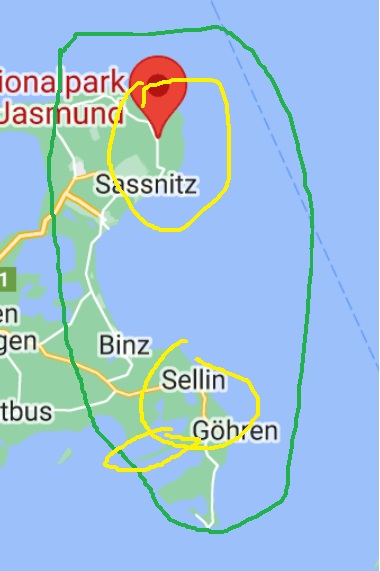
I don’t know if you specifically want Northern Sea with the tides, but I would recommend going to Rügen instead.
It’s beautiful, diverse landscape, famous paintings come from there and they have amazing bike infrastructure. The central east and south east is like five different landscapes in a nutshell (Ireland, Baltic Sea, ancient beech forest, chalk cliffs and bodden.
Sylt is pretty much one type of landscape as far as I know and you can get it anywhere in Denmark. East Rügen is way more unique and one of the places I keep returning to.
Also nice is “Prerow” on Darss because of the forest and wandering beach.
And Hiddensee, which is an island without cars. Never been there though.
Actually, I was once on Borkum, farther to the West. Delightful landscape.
I’ve never been to the Northern Sea in Germany unfortunately. Not sure why, but it’s an area I keep missing.
Well worth a trip, though even in summer, it can get rather brisk outside, particularly at the beach.
The people are a little frostier on the surface than they are in, say, Berlin for example, or in the South of Germany, but the landscape is lovely and perfect for bicycling around.
It’s definitely on my bucket list. There’s a lot of Germany actually that I haven’t seen.
Very nice pic of a rugged man among rugged scenery. We’re just back from Scotland, and along with liberal use of “kirk” and “minster”, there seem more olde type English words in use up there. Could be the whiskey talkin.
I was thinkin bout “Lappen” after the quiz – always good fun by the way these quizzs are – and of course all Germanic langs have a common root, though English now focuses only on the lap area of the skirt or garment.
And to lap, as in drinking by tongue/licking, seems to be from a different base… Löffel comes from that variant.
I’m studying for the written driver’s license test – thoughts & prayers welcome – and your site is a fine distraction (along with the brown sauce).
My understanding is Scots and modern british english split off from the same form of early english centuries ago so it would make sense to me that there might be old english words preserved in Scots that are no longer in use in standard british english. I’d be facinated to know more about Scots and languages in Scotland in general. There’s this whole debate around whats a dialect and whats a language, then you also have scottish gaelic as well which is a whole other thing…
Apparently still evident in North English place names, e.g. “Visby”, “Grimthorp” etc. Don’t recall precisely when the last Norn speaker passed, but it seems that it was spoken until at least mid-20th century.
In Yorkshire dialect, “to lake” was used meaning “to play”, similar to modern Swedish “att leka”, etc.
ah interesting. I know nothing about Yorkshire dialect. English dialects were hyper location specfic apparently. I heard you’d be able to tell what village or town someone came from based on how they spoke..
Not to dissimilar from certain Swabian communities! In Nuertingen, for example, “three” is pronounced “dru”, however in Haigerloch, “drie”, and so a native Swabian from the “Schwaebische Alb” will generally recognize immediately where their neighbor is from:-)
Thoughts and prayers sent!
Seriously, are you using an app for the training?
I did and it was soooooo good. I passed first try (3 years ago) and never felt like I actually studied.
But should you fail…apperantly 50% of Berliners fail the exam the first time, so it’s normal.
Are you taking it in German or English`?
auf deutsch natürlich ;) will definitely check out the app, picked up a used study book for €7. Now I know what those yellow diamond signs mean.
I should have “converted” my license six months after residency began; certain US states have agreements where there’s no need for any exams. No luck there.
Due to my delinquency, I heard the Beamter *may* force me into also taking a driving test. And they routinely cut up still-valid foreign licenses unless you share a secret password.
and Schade that the olde Lappen will eventually be no more.
I like old books for study, but NOT for this topic. The apps (there are several, find the one you like best), gives you explanations, tracking and also videos which are part of the test.
Normally, the older the textbook, the more thorough and structured the lessons, but it’s also true that they’re often hopelessly out of date, such as in vernacular or slang usage!
Don’t you agree?
Absolutely! Though I don’t actually want my textbook to teach me that.
For me, a textbook should teach me the grammar and structures and leave the rest for teachers or the web.
I agree! Although a good textbook can in fact provide conversation starters and instigate stimulating discussion as well.
I got all 7 from context, but I only knew “luft nach oben” and “auf die Palme bringen” from actual experience. My son knew “in der Zwickmühle”, but I didn’t believe him that his friends use it in a board game. The English equivalents tend to be used only in more dramatic situations.
Mensch, du bringst mich auf die Palme! = Geez, you’re driving me up the wall!
Those don’t really feel the same to me, and I’m really hesitant about using these kinds of expressions. I work with people who seem like they speak flawless English, until they try to use one of these kinds of expressions and it is totally misplaced.
The operative word here though is “seem”! I’d go for broke in your position and just use them, albeit judiciiously, or you’ll never move forward.
As my grandfather used to tell me as a boy when I was learning French in school, tongue tied about speaking to our seemingly bilingual visitors from Marseille: “Na, Junge, wer nicht mal ins Wasser traut, lernt nie schwimmen.”
Error in my post! The phrase is “…wer SICH nicht mal ins Wasser traut, lernt nie schwimmen.”
Just a silly typo (Fluechtigkeitsfehler), that’s all. Apologies.
I think I did notice it, but was in a rush so it didn’t fully compute :)
:-) Nett von dir. Aber als Muttersprachler besonders peinlich.
Hallo liebe Emanuel,
Ich kannte nur 4 auf 7 Ausdrücke. Es gibt viel Luft nach Oben für mich !
Viele Grüsse nach Berlin und schönen Tag.
Es gibt immer Luft nach oben beim Sprache Lernen :D
5/7 correct. I tried to read something ‘special’ into “weit hergeholt” but it’s not that ‘weit hergeholt’. The meaning of “durch die Lappen gehen” also escaped me but I’d say it was one my favorites because of the origin, along with “die Zwickmühle” – an Americam expression is ‘between a rock and a hard place’, same thing only different.
“sich in der Zwickmuehler befinden” = to be on the horns of a dilemma”zwischen zwei Stuehlen sitzen” = to be between a rock and a hard place”zwischen Baum und Borke sein” = be in a (tough) spot
Such expressions are notoriously difficult to translate as the image in German is often quite different from English…and of course vice versa.
“sich in der Zwickmuehle”….
To me, “in einer Zwickmühle sein” is not always negative. It can be having to decide which date to go to for example. So I don’t think “between a rock and a hard place” is a good fit. Curious if you as a native speaker feel the same.
Indeed! “(sich) in EINER Zwickmuehle sein (befinden) to me means again “to be on the horns of a dilemma”, or, unable to decide something. “Zwischen zwei Stuehlen sitzen” to be almost BETWEEN two objects, literally, “two chairs”, that is, between the proverbial rock and a hard place. Did I answer your question sort of?
Ja, hast du :)
Also ‘freut mich schon! Ich habe doch die Tendenz, langatmig zu sein.
“weit hergeholt sein” = to be far fetched
So if you want to say “there’s room for improvement,” does it sound OK to use “es gibt”? For example:
I thought it might be more common to say something like
But when I looked just now, I did see some examples with “es gibt.”
Oooh, this is a subtle distinction we native speakers take for granted, but even as a teacher, examples I find are more conclusive than explanations!
“Es gibt viele Studenten im Vorlesungssaal.” = Presently [and for some period now] there are many students in the lecture hall.
“Da sind viele Studenten im Vorlesungssaal.” = Nearly a hundred percent the same meaning as in example sentence one.
Probably, the second sentence is slightly more colloquial than the first, but that’s about it:-)
Examples from native speakers, and gut feelings, are priceless :)
So for these two sentences:
Do you think you say or hear one version more often than the other? Or maybe it depends on the situation?
Sorry, I forgot to give my take on this, too!
To me, both sound okay as does “da gibt es noch…”.
In German, you have to be a little more specific than in English, I’ve found.
For example, “There’s room for improvement.” is perfectly acceptable in English, as is. However, in German (as in most instances generally), we have to qualify a bit.
“How’s my German, Emanuel?” – Was macht mein Deutsch, Emanuel?
“Well frankly, there’s room for improvement.” – Nun um ganz ehrlich zu sagen, ist es schon verbesserungsfaehig.
The German sentence literally means “To be perfectly honest, it is [already] capable of improvement.”, somewhat more exact, if formally direct, than in English.
Often my students tell me that German somehow feels almost more “sarcastic” than English. I suppose they mean than there’s usually less wiggle room in German, though as a German native speaker, again, I really couldn’t judge.
I’m not sure if I follow here. To me, just saying “Verbesserungsfähig” as a reply is perfectly idiomatic.
Your version adds some “padding”, but it’s not really more specific. What do you mean by “qualify”?
I guess I meant that frequently German appears more precise to a majority of my native English speaking students, especially from the US, often having had little to zero foreign language background prior to their first semester of German.
“Specific” might well have been the incorrect word choice.
Appreciate the follow up though.
Being a first language German speaker too, occasionally I’m at a slight loss how to explain certain points which for us are simply second nature:-)
A fascinating point definitely worth pursuing.
I appreciate the challenge! Love the tiger one. I only knew one of these so even though i guessed a couple i’m gonna give myself 1/7 today.. : )
I’m pretty sure you’ll hear at least one in the wild in the coming days.